
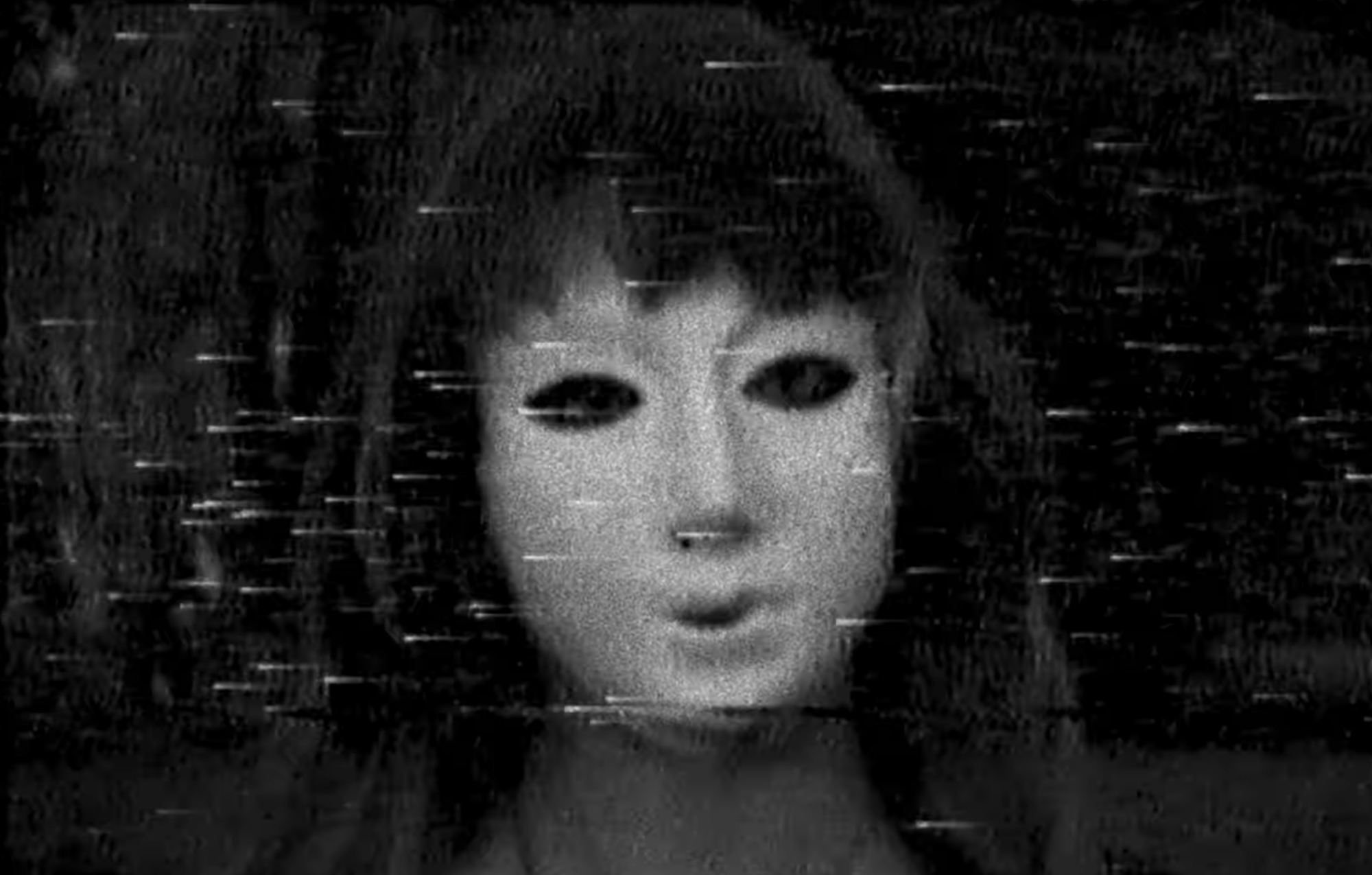
THE SLAM EDITORIAL
ON EXPERIMENTAL FILMMAKING
WITH MARJORIE CONRAD AND RAJEE SAMARASINGHE
Following their success at Cannes and the Film Independent Spirit Awards, filmmakers Marjorie Conrad and Rajee Samarasinghe joined Slamdance’s Peter Baxter to discuss their artistic beginnings, the role of film festivals, and the future of experimental filmmaking.
PETER: Welcome everyone! Today we are joined by filmmakers and Slamdance alum Marjorie Conrad and Rajee Samarasinghe.
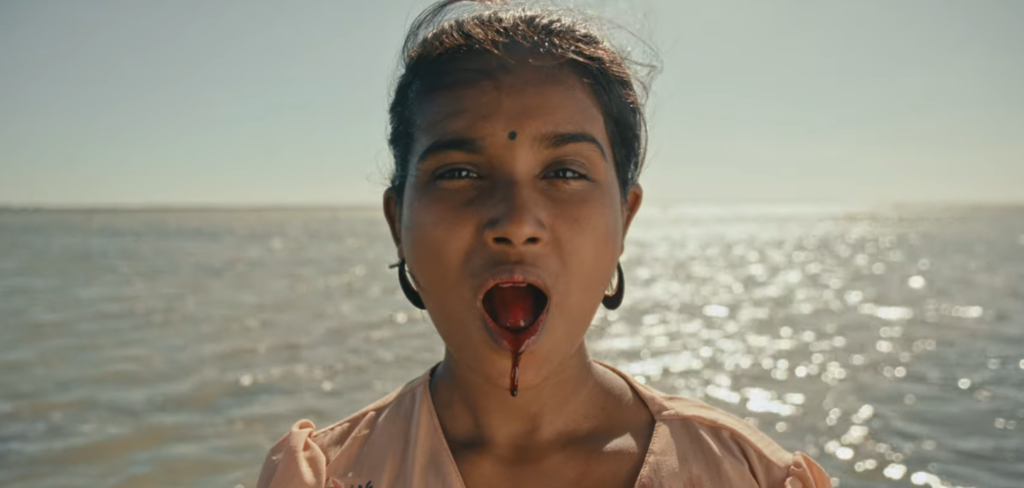
Rajee is a Sri Lankan filmmaker and visual artist, and his work explores a wide array of topics including the Sri Lankan Civil War, his family, and the deconstruction of documentary and narrative film. Rajee’s short films and recent feature Your Touch Makes Others Invisible have led to him winning this year’s Film Independent Spirit Award for Truer Than Fiction.
Marjorie Conrad is a French-American filmmaker who premiered her first film Chemical Cut at Slamdance in 2016. Marjorie is also known for her feature films Body Issues, Desire Path and The Joyless Economy which has just premiered at Cannes’ Directors Fortnight.
Welcome to you both.
Congratulations Marjorie on your Cannes premiere and also Rajee for your recent Spirit award. Before I ask you to share some of your filmmaker experiences that have led to your success, I wanted to take a moment and ask each of you about your origin story and why you became a filmmaker?
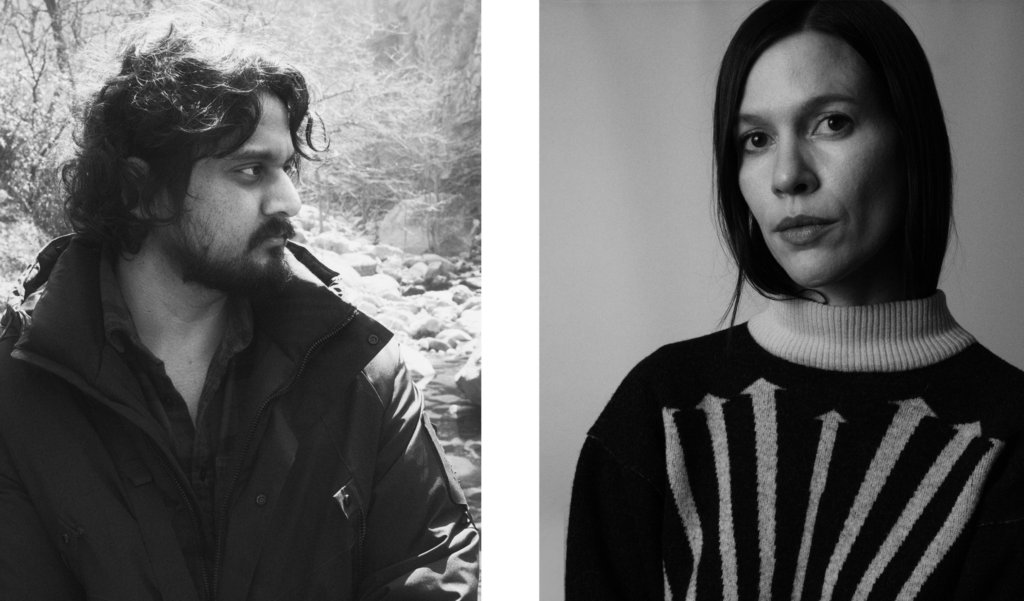
MARJORIE: I grew up in Marseille, in a family of graphic novel artists. Because of my parents’ work, we were able to emigrate to the States. We moved to L.A., and the transition was difficult because I hadn’t been in public school before. I was homeschooled by my parents, so it was sort of an unusual upbringing. And I didn’t know any English. I went to a film/media magnet middle school, and my teacher, James Gleason, took pity on me and gave me some short stories to adapt. Those became my first films, and they really helped me use the camera. This became sort of a refuge for me as I was trying to learn the language and get acclimated to a new country.
I went to San Francisco to study film for undergrad, and there I met Craig Baldwin, an experimental filmmaker well known for his found footage films. I spent a lot of time at Artists’ Television Access, and that really helped anchor in my mind the level of conviction and passion needed to become an experimental or independent filmmaker.
My thesis film, Limehouse, did well at school and was also noticed by the Sundance Institute’s feature film program manager, who encouraged me to apply to their Screenwriters Lab. That application was my first attempt at a longer piece, and it became Chemical Cut, which premiered at Slamdance.
RAJEE: Well, first of all, I’m excited to see your films, Marjorie. My origin story starts in Sri Lanka, like many of my films do. Born and raised there during the Civil War (my family) fled the war when I was ten for the US.
I don’t know how I ended up in film, really. It was a stupid decision (at the time) because my family really didn’t have much when we moved here. So when I became interested in the arts, it was kind of a horrific decision, but it was like I had no choice. It was a very kind of tunnel vision towards the arts. I became interested in the moving image and really filmmaking became a process where I was kind of able to examine and deal with the trauma that I had gone through as a child in my country. I started making films in undergrad when I was going to UCSD, UC San Diego, and I went to CalArts for grad and was still kind of figuring things out. Most of my films deal with Sri Lanka, sociopolitical conditions in Sri Lanka, the civil war, my own memories and my family. I’ve only screened experimental shorts at Slamdance, just a whole array of weird shorts and Your Touch Makes Others Invisible is my first feature. It’s kind of a culmination of the work I’ve been doing in the short form in Sri Lanka. Intentionally, it came at the end. It was extremely dangerous to shoot. I shot it in the north of Sri Lanka which is still occupied by the military. I had to disguise what I was doing there. I submitted a fake screenplay and smuggled hard drives out of the country to make this film. So I can’t go back now.
PETER: What inspired you to become a filmmaker? Was there a key moment?
RAJEE: I’m not sure there was a moment. I think it just seemed like initially I was interested in illustration and then I just got bored with it. I felt kind of confined by that medium, and then I just started looking at other mediums, and cinema seemed like a pretty powerful way to examine my past and my memories. And I was kind of experimenting, naturally curious about form and experimenting with form. And I just kind of fell in love with that and just continued down that path. I’m not sure I had a mentor, really, who kind of ushered me into cinema, that didn’t happen. I was kind of left to my own devices.
In school of course, you know, you find your mentors like Nina Menkes who was a mentor of mine at CalArts and Rebecca Baron yeah, I’ve had great mentors. But in the initial stages, I was just kind of left to my own devices finding my own way. And I landed at this.
PETER: You’ve now combined experimental filmmaking in both narrative and documentary genres. What is your process for working like this?
MARJORIE: I should say that it’s been a gradual process, trying to sort of unlearn a lot of conventions, because I started out with my parents making very narrative work in the household and setting that as the standard. And even in middle school, where I was first making films, it was very narrative. I had also been taught to value higher production value, to think that’s what you should aim for. So it was just a lot of trying to free myself from that. It took a long time.
My first two features were microbudget, but even at those levels, they were still too high for me to self-fund sustainably. So far, I’ve always been working, saving, and then making a movie. With my third, Body Issues, I made the movie I could make during a difficult period. I used a few GoPros that were lying around and some VCRs, and worked on creating a voice-over narration that felt dissociated, and surprisingly, people were receptive to it.
PETER: Rajee, you were mentioning you’d led up to your feature film with a series of short films and this was intentional. Intentional because aside from not being able to go back to Sri Lanka after the feature was made, it also allowed you the time you needed to learn your process of combining traditional documentary filmmaking with experimental filmmaking?
RAJEE: Yeah, a lot of my shorts I guess are technically experimental documentaries. It probably goes back to my childhood. Most things go back to our childhoods, but filmmaking became a way to kind of reexamine my relationship with propaganda and media when I was in Sri Lanka, and reevaluating that and how reality is represented and presented and kind of taking control of that as an individual, as an artist. So that was kind of the draw to documentary. It wasn’t even an intentional thing. It just was a natural expression, a curiosity that emerged out of me.
I’m not even particularly interested in documentary as a form, though. I’m in that space, I guess but, you know, I eventually just kind of became more and more curious. It’s a very complicated and flawed form, and that’s what I find interesting about documentary and nonfiction, and becoming interested and interested in ethnography and the gaze of the ethnographer.
I’m insanely active for some reason where I make a lot of shorts. I mean, I’m currently working on two shorts this year which I’m going to finish soon, and I just finished this other feature and I’m writing another two features. I just don’t know what drives that. It’s like anxiety or something. But yeah, the shorts definitely helped prepare me for my first feature.
PETER: I think a distinguishing aspect of your filmmaking is the deep trust you’ve gained in your subjects. Can you tell us how you develop this trust?
RAJEE: I mean, for me, cinema is a social act. You know, it’s one of the reasons I’m drawn to cinema. It makes me feel connected to people, to humanity. I mean, it was a real privilege to be able to tell these stories and platform these testimonies. That was really the point of the film to showcase these testimonies from these women who had suffered quite a bit. And they’ve been waiting to tell these stories. There were so many testimonies I couldn’t capture because it was so dangerous to shoot. There were many times we had to just take our equipment and run away, but it is a thing of trust, and I feel so privileged. I have a great responsibility to them and I hope that I’m honoring that.
PETER: You spoke about the finance of filmmaking and you’re both practiced now in working in micro budget environments that intimacy with your subjects. Do you want to continue to work like this or do you want to have more money and bigger crews to create with?
MARJORIE: I want to simplify even more. I think it’s hard to make something very simple, and it is easy to delegate, hire people, and let them make a lot of decisions you may not even be aware of. So I think the more money you have, the more diffuse credit becomes, and the more difficult it is to understand your mistakes and improve. With my last two films, I’ve learned a lot. They were much smaller, and I was much more aware of the camera and its role.
I think there are so many more combinations I need to explore, so many filmmakers I need to learn from and watch. I want to pay as much attention as possible to the world around me. Because for me, it’s more inward-looking. I like small stories, individual stories that shed light on broader cultural questions.
With The Joyless Economy, my first documentary, I wanted to be as accurate as possible, and I tried to be as disciplined as I could with my subject’s words, the presentation of her entire collection in the order it was shelved, and the events in her relationships. It’s been interesting to see the reaction to something sparse and austere. It’s all right there as data, and the reaction’s been very polarized. People either love it or hate it, which I find intriguing.
Ultimately, the film explores a universal question: Have you ever wanted a fantasy to be real? I think everybody has.
A bigger budget obviously helps with post-production, and the festival circuit can be expensive, but I think the smaller you can go production-wise, the better. I concentrate as much as possible on the writing and the editing. My crews have gotten smaller and smaller, and on my next project, I will just work with John, my fiancé. So yeah, that’s it, the two of us in the basement working with film.
RAJEE: My feature was a low-budget feature and probably the food cost of that film is more than all the twenty or so short films. I mean, I make short films for $0 to $5. When you go to a festival and you talk to someone and it’s like, wow, my film is really, really low budget compared to your film.
I’m now writing a horror film, which I think will take more money to make, hopefully not too much, but I also don’t think I’ll ever give up making films. I just made a film in China with my wife and with the Guggenheim grant I got, that funded everything. So that was like, okay, I don’t have to deal with anyone else. I can just make this with my wife. And we did everything on the film, and that felt so good to do that.
Scaling down alleviates a lot of logistics and stress. It kind of scales it back to the point where you almost feel like a painter and you’re just confronting the canvas, and that’s where you’re trying to be, where I’m trying to be anyway.
RAJEE: Marjorie, you mentioned your film is polarizing. That is a great place to be, in my opinion. I mean, I’m happy there are people who really hate my work and that’s fine. That’s a good place to be. Otherwise you’re not doing something right. If everyone loves you, then that’s a very strange position. I feel uncomfortable being in that position. I think I’ve made maybe a couple of shorts people kind of universally love. I don’t like that. Give me the pain. Give me the hate. Let me wrestle with that. Let me deal with that.
PETER: Marjorie, you made one of the very few American films to be presented at Cannes this year, or for that matter over the last several years. Who do you think that is ?
MARJORIE: It perplexes me, too. I’m not sure I know the answer, but I did hear from one programmer that they actually get the most amount of films from the US. It’s interesting that it’s the number-one country submitting. I can’t pretend to read their minds, but I know that at the Directors’ Fortnight they’re looking for a singular mise-en-scène. They consideredThe Joyless Economy a medium-length film and programmed it in the shorts section. It’s 58 minutes, an awkward length, with a pretty serious tone. It’s black and white, it’s grimy. The other films were much shorter and had high production value. So it’s just a very outsider movie… An underground, outsider movie. I think some people were excited by that. My film didn’t try to please anybody. Surprisingly, I got only three walkouts.
PETER: Rajee, as well as your films playing in festivals like Slamdance, your work has also been showcased in museums like MoMA. What role do you see film having in gallery spaces and museums?
RAJEE: I mean, you know, it feels like a different context. I probably lean into the cinema context more than the art context, though I think being an experimental filmmaker, especially a short form experimental filmmaker, you tend to get drawn into the gallery space occasionally. The world of museums and galleries is probably more lucrative than being an experimental filmmaker. Navigating through the cinema space is just the way it is. The experimental cinema space hasn’t been able to commodify work the way the art world has.
I think it’s an interesting exchange between the two and, you know, it’s wholly different. I mean, to go back and go back to funding. It’s interesting, in America, arts funding is so sparse, actually and it creates this culture of scarcity and competitiveness. Whereas when I was traveling to Europe, that didn’t seem to be the case so much because the government kind of subsidizes the arts to a large degree. But I know that there are problems even there.
I’m always surprised how well funded certain short films are in Europe. Whereas, I took my $3 film to this festival or something. In the art world, commerce is deeply embedded in the practice no matter where you are. But with film, there’s a much sharper divide between the U.S. and places like Europe or Canada in terms of funding. In the U.S., it often feels like the wild west, whereas in Europe there are more established systems for supporting film work, even short films. There’s an interesting kind of exchange between the two spaces, but I feel like they’re very clearly defined and different too.
PETER: Do you think that as a result of filmmakers being funded by governments they have greater ability to explore the sense of mise en scene and not concern themselves with commercial aspects that dominate the US film industry?
RAJEE: Ultimately, it comes down to creativity. The whole funding issue in the US can be, you know, can be crippling to a lot of artists. They don’t have a way to survive. And, you know, they can’t sustain a practice. Whereas I suppose in Europe it’s slightly easier. But you know, ultimately it’s about creativity, whether you make a $5 film or you know, a $120,000 short, whatever it is.
MARJORIE: I think it puts so much weight on a single project if you’re waiting years to finance it. It limits your output and ability to improve as a filmmaker. It also risks homogenizing the work because you start shifting what you’re trying to make into something that will please somebody and meet some expectations. And I’d rather be free when I’m making something. My solution so far is probably not one most people would like: working day jobs unrelated to film, being receptive to potential material in my work environment, and saving so I can test things out as much as possible.
I’m interested in seeing work from people that’s distinctly them. That’s what is exciting and inspiring for me. Unfortunately, I think even most festivals are very risk-averse. That’s what I found over time. Probably more risk-averse now.
PETER: Rajee, do you agree with that?
RAJEE: Yeah, festivals tend to be very risk averse. And you know there’s this whole kind of system built into festivals where tracking films goes on for years before it’s even made, where this film got this kind of funding, got this high profile grant or whatever. It’s kind of on the (festival’s) radar. And they usually get programmed and of course, maybe some filmmakers even unconsciously conform to the tastes of the funding apparatus.
What is expected of you when you are awarded those funds….. the access to make certain films that realize your vision and also to live and pay the rent and things like that, where you can just focus on your work…you know, it’s weird. There’s never kind of a perfect way to do this. I’ve seen friends who are really dissatisfied with funding through many international co-productions. They find that very exhausting. But, there’s also friends who are kind of living on the fringe who can’t pay the rent. There’s a perception that the US has an unlimited amount of funds, but the US doesn’t really subsidize the arts.
It goes back to kind of figuring it out. I mean, Hong Sang-soo, he makes films with his wife, and maybe that’s the secret too.. Finding a spouse who you can collaborate with.
PETER: You’ve both mentioned the importance of your spouses in your filmmaking journeys!
RAJEE: Maybe that’s the trick. You can build this vision and realize this vision together. It’s all about finding a process and a system where you can make the work that you want to make. Sometimes it doesn’t take a lot of money. I feel like I’ve found that framework and built that over many years, as I’m sure you have, Marjorie, and it’s about trying to sustain that and be true, true to your vision.
PETER: You mentioned that you’re working on a horror feature right now, as well as shorts. Can you tell us more about this?
RAJEE: My producers are very exhausted with me because I’m taking too long to write it, but I can’t give the elevator pitch yet. The two shorts I’m currently working on are actually related to the feature I made in Sri Lanka.
MARJORIE: I don’t really like to talk about it before I finish it, but I will say it’s very small, with two characters… Two women, voice-over, 16-millimeter film, probably in black-and-white, about a survivalist. I kind of just like to focus on one project at a time.
PETER: Aside from your future projects, what future do you see for experimental film?
RAJEE: It’s interesting because I feel like experimental aesthetics and techniques have been absorbed by pop culture to a great degree. I think even on YouTube and social media. In the mainstream space you see flashes of experimental film. I feel like we’re experiencing it kind of everywhere, and I feel like we’re more open to it now, more than ever. I think experimental films should be shown more, but it feels like film festivals are scaling them down, especially after the pandemic. A lot of programs scaled down, and they were quick to get rid of the experimental films, which was unfortunate. I’m glad Slamdance still has an experimental section. That’s very good. I feel like you now see far more experimental aesthetics in the popular consciousness than you did before. I think it’s being embraced now more than it was before. I’m like, okay, this feels like where cinema is going.
MARJORIE: It’s hard for me to say that I know the state of experimental cinema. I know what I gravitate toward, and I definitely look at YouTube a lot. I look at YouTubers who don’t seem to have any knowledge of experimental cinema practices, yet use the camera in innovative ways, maybe without realizing it. I think that’s a great form of experimental cinema that hasn’t been embraced by festivals at all and is too lowbrow for them to even consider. But I think it’s cinema, and it’s inspiring. They invest so much power in the camera and its ability to bear witness. It’s almost mystical sometimes. It’s like they’re using the camera to save their life. I find that invigorating.
RAJEE: YouTube culture has kind of changed the spectators’ relationship with duration, too. I feel like people are more open to longer pieces (podcasts, mukbang videos, Twitch streams, ambient videos).
MARJORIE: And also maybe voiceover too because everyone’s explaining everything and with podcasts and everything, I think they need more. Maybe that’s what it is. They need more explanation. They need things articulated verbally.
RAJEE: Maybe we’ll all be YouTubers in ten years, hopefully not. I love going to film festivals. I think it’s one of the great pleasures of being a filmmaker, it really is. Going to a film festival and to see your film in a theater with an audience. I love festivals and I don’t think I could ever give that up.
PETER: A great way to wrap up our Thank you both very much for sharing your filmmaking insights today. All the best with your new work!
Follow Marjorie on Instagram @marjconrad and learn more about her work here.
Follow Rajee on Instagram @rajeesamarasinghe
For more like this, subscribe to The Slam, the official Substack of the Slamdance Film Festival reporting on the future of filmmaking.