
THE SLAM EDITORIAL
Inside Philadelphia’s Mumblecore Revival
BY ELIJAH FISCHER
Philadelphia is America’s underdog. Sandwiched like the world’s saddest cold cut between New York and New Jersey, Philly has always always been the ugly duckling on the list of East Coast major cities. Perhaps it’s this chip on our shoulder that makes Philadelphia’s brief appearances on the silver screen come with a vengeance. From “Rocky” (1976) to “The Watermelon Woman” (1996), when Philly films break through on the national stage it’s through a misfit tenacity that turns the term “independent cinema” into a battle cry for the unheard, unseen artist. It’s no surprise then that the mumblecore movement, which once ruled independent cinema only to become a casualty in the rapid gentrification of New York City, is beginning to rise from the ashes in the birthplace of American independence. Mumblecore’s barebones structure and bittersweet soul seem to embody Philly’s battered, second-banana spirit to a T. A decade after the subgenre’s decline, it seems to be finding a new voice through Philly’s Gen Z and Zillenial filmmakers, who are lending a unique rage and angst only the City of Brotherly Love can bring to stories of disenfranchised and quirky youth.
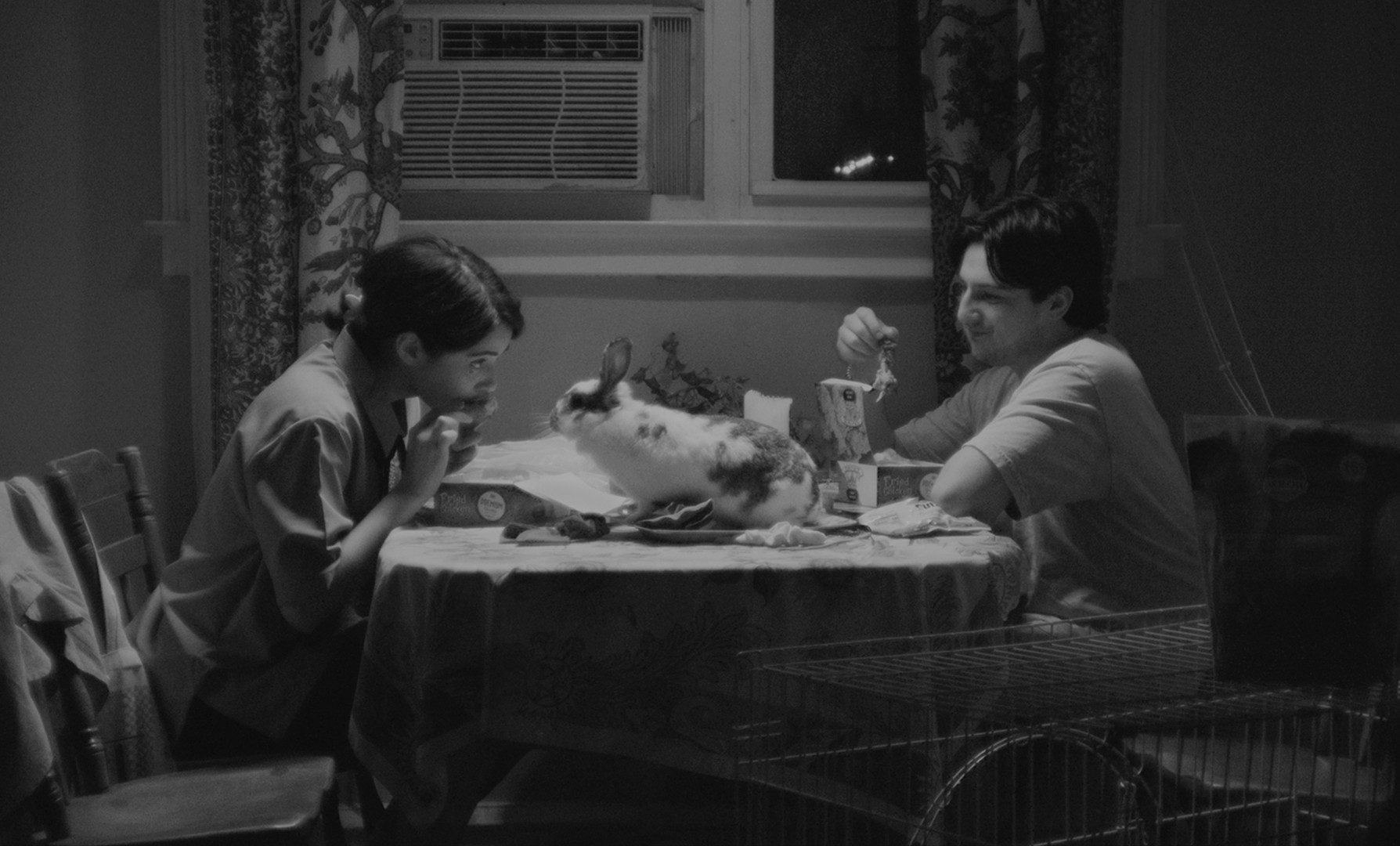
Adam McAloine, Mike Macera, and Lissa Carandang-Sweeney are the core trio behind Scene 3, an unofficial cohort of postgrads from Drexel and Temple University and the origin of Philly’s mumblecore revival breaking onto the national stage. “It was originally started under Adam,” Macera said. “He made a few shorts over the summer [while the group was still in college] that we all kind of collaborated on, and he started that name just to have something to brand it all under.” Since then, the group’s feature debut Alice-Heart (2025) has been making waves on the festival circuit, including an award-winning world premiere at Slamdance. The film stars Caradang-Sweeney in the title role as an aspiring writer who finds herself suddenly cut off by her parents while trying to navigate an increasingly messy senior year at Drexel University. “I was cast in Scene 3 colleague Zach Rineer’s senior thesis, so I met them through that and fell in love with everyone in this group immediately.” Caradang-Sweeney said. “We all kind of have the same addiction, the same necessity to keep making things no matter what. It’s so wonderful to get to collaborate with them because we all share brain cells.”
Alice-Heart was born from that combination of drive and bond. “I wrote the script as a senior at Temple.” Macera said. “I had no idea what I was doing in terms of education, how to make rent, where I was going with my writing. It was written from those frustrations.” For Caradang-Sweeney, the influence of Asian-American mumblecore on the making of Alice-Heart was clear. “James Sweeney’s Straight Up and Kit Zauhar’s Actual People are two inspirations I’d have to cite. Seeing these mixed-Asian actors (and filmmakers) in these low-budget, mumblecore-adjacent films was very inspiring when approaching the role of Alice-Heart.” Zauhar, a fellow Philadelphian, was also cited as an inspiration by Tony McCall, Caradang-Sweeney’s co-star in Alice-Heart and frequent Scene 3 collaborator. McCall recently wrapped production on his own locally shot directorial debut, The Falls, which he co-wrote with Macera.
“The approach was very much the same [as making Alice-Heart], like let’s just use what we have. Most of it was shot in my apartment in East Falls.” McCall said. “The majority of the cast and crew were friends from Alice-Heart, but there’ll be some new faces as well.” Jared Gillman, New Jersey native and star of Wes Anderson’s Moonrise Kingdom, heads the film alongside Josh Martinez as two college friends brought into an awkward reunion when one moves in with the other following a housing crisis. “Philly is full of working class folks, but also a lot of undiscovered artists.” McCall says of why the city is becoming a hotbed for mumblecore storytelling. “It’s so expensive to make things in New York now.” Macera adds. “Philly’s scrappy, but Mumblecore is also inherently pretty melancholy. There’s a lot of squandered potential to it, everything feels like it’s held together by a string, and I think that contributes to the anxiety that’s felt in our [mumblecore] films.” Caradang-Sweeney and McAloine had similar things to say about how the grit of Philly seeps into its film scene. “The minimum wage hasn’t been raised here since like 2009, but the cost of housing has risen exponentially.” Caradang-Sweeney says. “Our generation is so fucked for financial stability, especially when you’re in the arts. I think Mumblecore is so enticing to young filmmakers because it’s so affordable.” McAloine adds that “We’re all broke, I feel like that’s the common thread between Gen Z, Philly, and the Indie scene at large. We’re telling stories about our own path, these movies are making very little money but we get to make them on our terms. Everyone’s the underdog.”
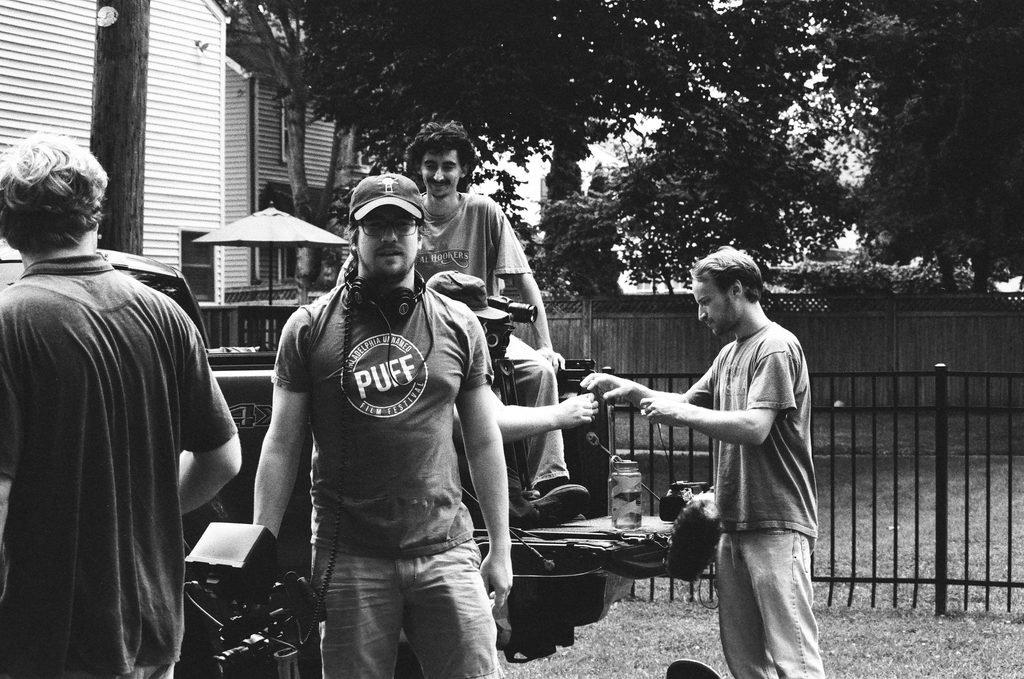
For Aaron Bartuska, a New Jersey-based public school teacher by day, independent filmmaker by weekend, and Joe Swanberg devotee in between, it becomes a question of city vs suburbs. Bartuska, who was an outgoing upperclassman in Drexel’s filmmaking program just as Caradang-Sweeney and co. were beginning to form what would become Scene 3, is currently in post-production for his final entry in a trilogy of Philly-area Mumblecore features. Though Bartuska and Macera are united in their love of improv-based dialogue, Bartuska takes it one step further by often shooting without a script. “I shoplifted that tactic directly from Swanberg.” He jokes. “I started watching his movies, like Hannah Takes the Stairs (2007), very young and it kind of made me realize that I could start making movies right now if I wanted to.” The first film in his trilogy, The Yardley Boys (2025), is an entirely improvised odyssey through suburban Pennsylvania as two 20-somethings stuck in arrested development try to find a lost cat. “It’s about being open to whatever your actors are feeling that day.” Bartuska says of how his style of shooting impacts the mood of his films. “We filmed it all in Bobby (Decker)’s childhood home, so we just leaned into that. […] We just tried to capture this boiling point life arrives at. The Greater Philly area, right now, feels like it’s at a similar boiling point, but at the same time there’s this constant vibe that Philly is always gonna have to prove itself. The kind of mantra of the Mumblecore movement is ‘even if we don’t have the resources we’re gonna do it anyway’, and that sort of scrappy something-to-prove is felt here, even in the places just outside the city.”
Brewce Longo, “Mumblegore” king and longtime supporter of the underground film scene, has no doubt that “Philly is an incestuous city”, at least if his 2025 sendup of indie filmmaking madness Vick & Tarstar’s Scarecrow Factory is to be believed. Longo has long fostered a friendship with Swanberg as well as Bartuska, and has made his production and distribution company Blood Sick a pillar of the Philly film scene. “Meshing horror and Mumblecore feels natural to me.” Longo says. “I like to write characters that people care about, and making characters who are relatable. My movies have slowly gotten more dramatic as far as inter-character relationships go and, you know, I’ve had that sort of drama before, those breakups, that conflict, so it comes easy to me.” Longo’s work is almost exclusively shot-on-video, something he finds he shares with the ethos of Mumblecore. “We’re just getting down and dirty with point-and-shoot. We use a lot of the same cast and crew between features. Kasper Meltedhair [who Longo co-wrote Vick & Tarstar alongside] makes the process super collaborative and fun. You really just want to capture real people and real emotions.”
At its unvarnished core Philly is a city where misfits thrive. Scene 3, Bartuska, and Longo have all found varying degrees of success bubbling up from the underground simply by telling stories about real Philadelphians, be they drug-addicted punk rockers or struggling college students. But what unites them more than the chip on their shoulder is the hole in their wallets: each filmmaker has a day job outside of the industry that acts as their main source of income. It shapes the stories they want to tell, and more importantly, how they tell them. What makes Philly the perfect birthplace for a new wave of Mumblecore is that it’s one of the last cities in America where Mumblecore can still exist as it was first imagined by pioneers like Joe Swanberg and Andrew Bujalski: cinema by underdogs, about underdogs, and for underdogs.