
THE SLAM EDITORIAL
Building an Audience Through Connection: Liz Sargent on Take Me Home
BY LILY CALVERT
Take Me Home is Liz Sargent’s feature length version of the 2024 PROOF Film Festival Grand Jury Prize winner which was featured in Slamdance’s Unstoppable Tour last summer! From an award-winning short film to a world premiere at the 2026 Sundance Film Festival, Slamdance is proud to co-host a special LA screening on October 9, 2026 at the American Cinematheque at Los Feliz 3.
Slamdance had the chance to chat with Liz about the film, her “confetti distribution” tactics, and what it took to make this story come to life.
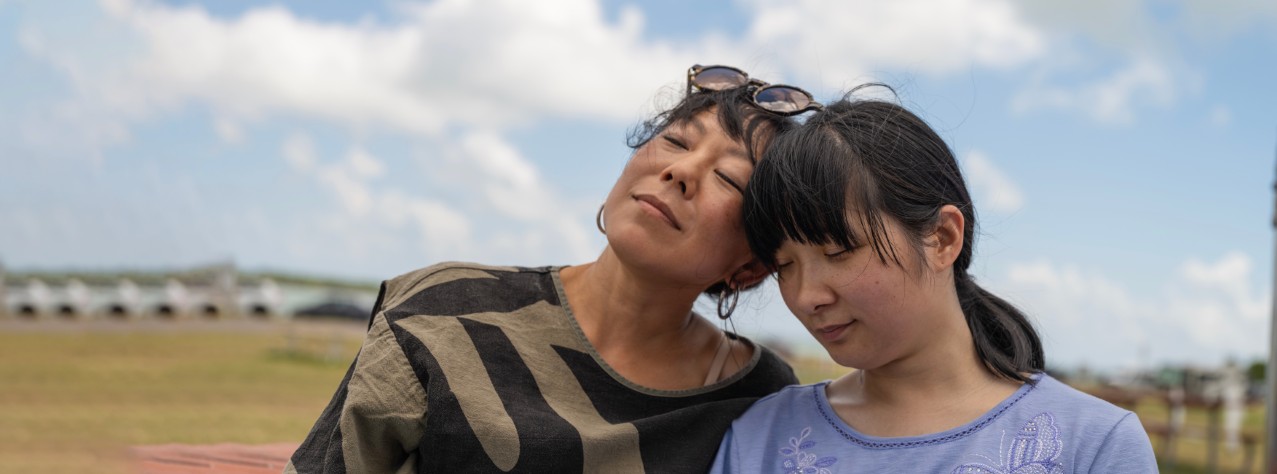
About the film: Anna (Anna Sargent making her acting debut), a middle-aged Korean adoptee with a cognitive disability, cares for her aging parents in a fragile balance of meeting one another’s needs. Alongside her sister Emily (Ali Ahn) and her father (Victor Slezak), they must confront challenging questions about the future, but Anna remains determined to build a life where all of them can thrive.
You’re now at this really exciting point with Take Me Home, where your distributor and collaborators like Slamdance are helping bring the film to audiences with this LA screening. Take us back to where this journey began. What happened after you premiered the film at Sundance, and how did you get from that moment to where you are now?
It’s really been a journey to find a path for this film. In some ways, I thought it might be easy after premiering the proof of concept at Sundance in 2023, then being a centerpiece at the White House for the 25th Anniversary of the Olmstead Act in 2024, and winning American Cinematheque’s PROOF Film Festival in 2024. But actually building the team and financing the film happened piece by piece, momentum in film is sort of Sisyphean.
My background is in modern dance. I don’t come from money, I juggle debt, and I have a lot of family that I support through different aspects of caregiving. So there’s never been a short cut for me, and the champions I’ve collected on the way have been imperative to the success of this film and my life.
Grants like the Julia S. Gouw Short Film Challenge by CAPE & Janet Yang offered me new visibility in the industry and the SFFILM Rainin Screenwriting Grant truly kept me afloat so I could take the time to write. This was the early support I needed to tell me that I was onto something, that I shouldn’t give up.
I look back now and feel fortunate for all the rejection during this journey, because when a partner did come on board, they were full-heartedly in with a deep belief in the potential of this project. They had a personal connection to the material and saw a piece of themselves in the story. I am so honored by their faith and I work hard to be sure this film will have a good life in the world and will make them proud.
These champions are cheerleaders, connectors, and visionaries that believed in a first-time filmmaker trying to build a process that centers a cognitively disabled actor as the true lead of the film. We had early support from Caring Across Generations, Give Not Take Media, Cinereach, River Road, and incredible champions like Jane Shin Park and Andrew Kim. There was just enough money to bring it together with this team, but we knew that additional funding would help us realize this film to its full potential.
So when we won the Tribeca AT&T Untold Stories award for $1MM, it was a huge relief. It meant we finally had the right support system to make this film with the creative approach I had been dreaming about. That was the green light, the passing of the baton, and I’ve been running with it ever since.
There’s clearly a lot of work that goes into getting an independent film from a festival premiere to a wider audience. Can you walk us through what that process has looked like for you- from the workload to your methodology, and why was it important to you to approach the release this way?
As I’ve said, we’ve had so many champions on this journey. Many nonprofits in the caregiving, disability, adoptee, and independent filmmaking communities supported the proof-of-concept short in so many different ways. I’m eternally grateful for that support, and I want to think about how we can all rise together and contribute to a larger national discourse around the themes of Take Me Home.
The filmmaking process can be incredibly transactional, but I come from a background in generative modern dance and experimental theater, where there is a deep love for process and for what can emerge through collaboration. My love for a project extends far beyond what happens on the screen. I’ve seen distribution models where a partner organization is asked to exhaust its outreach, social media capacity, or limited budget to buy out a theater. I want to find another way—one that creates a sense of shared ownership of the film rather than simply asking communities to help us sell it. We’re lucky that the Anita Bhatia Foundation also saw the potential for this film to make change in the world and granted us support so that we could give back to our community. This kind of visionary at the distribution phase is imperative for an indie film’s success.
That means offering free tickets and screenings to our network, creating events where people can come together without a financial barrier, and using screenings as opportunities for connection and conversation. We’re curating panels and Q&As that highlight the work already happening in these communities, allowing experts and advocates to respond to the social realities depicted in the film and imagine what might be possible in the future.
I do a lot of things the hard way because I want to care deeply about how the approach affects the community we represent. A huge part of my methodology has been asking: How can I use the momentum around this film to support the voices and organizations around me? They are our audience, but they’re also the people who are actively changing the way I get to live my life as a caregiver and a filmmaker.
Ultimately, this film is about envisioning something better in the world. There are already so many people doing that work, and I want the audience to leave the film thinking more deeply about who they can support in creating a more inclusive world.
This film offers an intimate look at the quiet caregiving struggles that so many Americans experience. I think one of the most powerful things we can do is share these stories—to make this part of being human more visible and less isolating. If we can normalize these experiences, create space for conversation, and connect audiences with people already working toward change, then maybe we can begin to shift the world around us into a more equitable place for all of us.
Looking ahead, what do you hope this experience with Take Me Home can open up for you, for the film, and potentially for other independent filmmakers? Do you see this model of micro-distribution as something that can be replicated, and what should filmmakers know about the challenges, resources, and partnerships that can make a model like this possible (or more difficult)?
It’s easy when someone shares your mission. It’s hard when someone is performative around your mission. That’s the distinction I am learning to recognize in this industry.
It’s such a hard, uphill journey, and you always hear, “No one will love the film like the director.” But I’ve actually found people who love this film, my sister, and the potential for change it represents as much as I do. We share the work, and it feels incredible to celebrate with a team that is genuinely invested in what we’re building together.
There’s a lot of talk about how to “find your audience,” but I don’t want to think of an audience as passive participants in a transaction or simply ticket sales. This story is shared. This conversation is ours.
I’ve been building these relationships for years, and I feel honored to be teaming with Caring Across Generations, which has relationships on a national scale. There are 130 million caregivers in this country. That is an enormous audience—one that can be quiet because of the responsibilities they carry, but one that has also been profoundly moved by this film.
So our intention is to approach distribution directly through the communities and organizations connected to the story, rather than trying to fight through all the noise of a traditional release. That’s what makes me excited about micro-distribution: the possibility of building a model around relationships, shared purpose, and trust. It’s not necessarily easy or scalable without the right partners, but I do think there’s something here that other independent filmmakers can learn from.
And I hope that kind of approach shifts the idea of what an audience can be. I want people to feel a sense of ownership of this film—to share it, bring people into the conversation, and help it reach the broad audience we know exists.
I think people can tell the difference between a film made for entertainment’s sake, a film built around an exploitative narrative, and a film that is part of a filmmaker’s life’s work. Sharing that point of view can create empathy. It can offer a window into lives and experiences that people might otherwise never encounter.
If we can build distribution around that kind of connection, maybe we can also begin to rethink how independent films are supported and financed. The audience isn’t just the end point of the process. They can be part of the process itself.
Take Me Home will be screening twice in Los Angeles this month along with several other nationwide stops. Learn more about the film and get tickets here
Laemmle Monica
9/30 (LA Premiere/Q&A)
10/2-10/8
Laemmle Glendale
10/1 (Q&A)
https://www.laemmle.com/film/take-me-home
American Cinematheque
10/7, 10/9 (Q&A), 10/11