

THE SLAM EDITORIAL
A NEW HOME FOR SHORTS PT. 2
BY LILY CALVERT
“Shorts Movie Theater is just about a month away from a soft opening – neighbors are popping their heads in, filmmakers are stopping by, and I can feel the excitement brewing. Not everybody watches short films, but everybody is a part of this new world of short attention spans, corporate consolidation in media, and demonization of diversity that influences what we get to see. We all feel the effects of these problems and what I’m learning by working on Shorts is that we all, also, want to be a part of the solution. So, excitement is the fuel we’re running on here – construction is hard, fundraising sucks, and finishing things is harder than starting them. Still, the power of Shorts is that it’s not just about movies as a product, but art as a tool that builds social fabric. We are trying to build a space that harnesses our voracious appetites for short form content (distraction on demand, I call it) to direct audiences to independent media and to each other. This project has a lot of people working on it and every day I get to witness each collaborator’s belief that we can chip away at a big problem by making this little theater for little films. See you all here soon, I hope!” – Karma Maselli
Shorts Movie Theater will be the first-ever cinema dedicated exclusively to short films. The micro-cinema will offer a 40-seat theater that screens a curated selection of the best new and classic short films. It is set to soft open Oct. 16th & 17th of 2026.
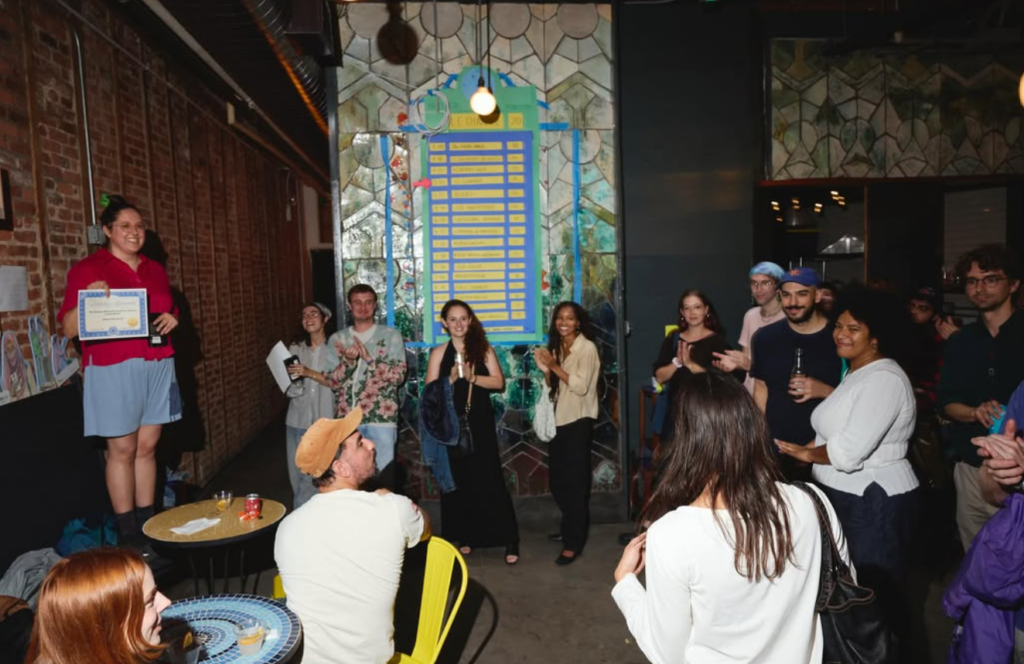
LILY: Short films are often treated as a stepping stone to features. How do you hope that Shorts Theater can change that perception?
KARMA: I think that in the film industry, I’m sort of an outsider. So I get to sort of learn about it as a new language and be like, ‘ha! so this is what you guys all think!’ Short videos are what audiences watch way more, and meanwhile feature films are struggling [right now]. So people tell me that all the time, you know, they’re like, ‘oh, but like when people make a short, they really want to make a feature’.
And yeah, maybe they do. But when an audience watches a feature, they might also be on their phone watching short videos. So, I don’t know if there really is this power dynamic of feature films having so much more going for them. I feel like feature films are a big, expensive ship. That when it starts to sink, is a disaster. Whereas a short film is light, easy, you know, it’s like, oh, it got blown away in the wind and it’s not that big of a deal.
I guess I just come at it from the perspective of, sure, lots of artists make short films as a stepping stone. But I wouldn’t say it’s because of any inherent difference between short films and features, besides the opportunities that are available for features. So for me, if the opportunities were there for short films, then it could even out – opportunities like the chance to make money, the chance to connect with an audience, the chance to keep working, get more opportunities from it. I think, from my very shorts-pilled perspective, it’s a matter of time before people think ‘this is just as viable artistically.’
I would encourage the artists who are so set on feature films, to consider if the length really matters in making something valuable. But I love feature films. I’m trying to make a feature film. I would hope [shorts and features] can coexist and that we’ll start a movie theater called Pants Movie Theater, and it will be long shorts and people will be like, ‘so it’s a feature?’ and we’re like, ‘well, it’s kind of like a short, but it’s just much longer.’ And then create an echo chamber of confusion that our audience comes to resent.
I think our film industry is very monetized. We’re really into, ‘how can this make millions of dollars’ and less into, ‘how can this make $1,000?’ Because no feature project can recoup with $1,000. So it needs to be at that bigger scale.
But ticket sales, you can make a lot of money if you sell a lot of tickets. I think the value of short films economically is, if we’re playing 15 different short films and each one has a cast, crew, and friends, there’s a lot of people who will buy tickets for just that film. When they’re stacked up with all the people for each short, it’s way more than, I guess, would sell for a feature. And I don’t know, I just think they seem easier to make money off of. But maybe I’m like, so delusional.
LILY: Can you give us your Letterboxd top four short films?
Karma takes me over to the wall where a subway style marquee will soon go. For now, they use torn-up pieces of notebook paper. She gazes proudly at an array of 56 shorts from past pop-ups and future programming.
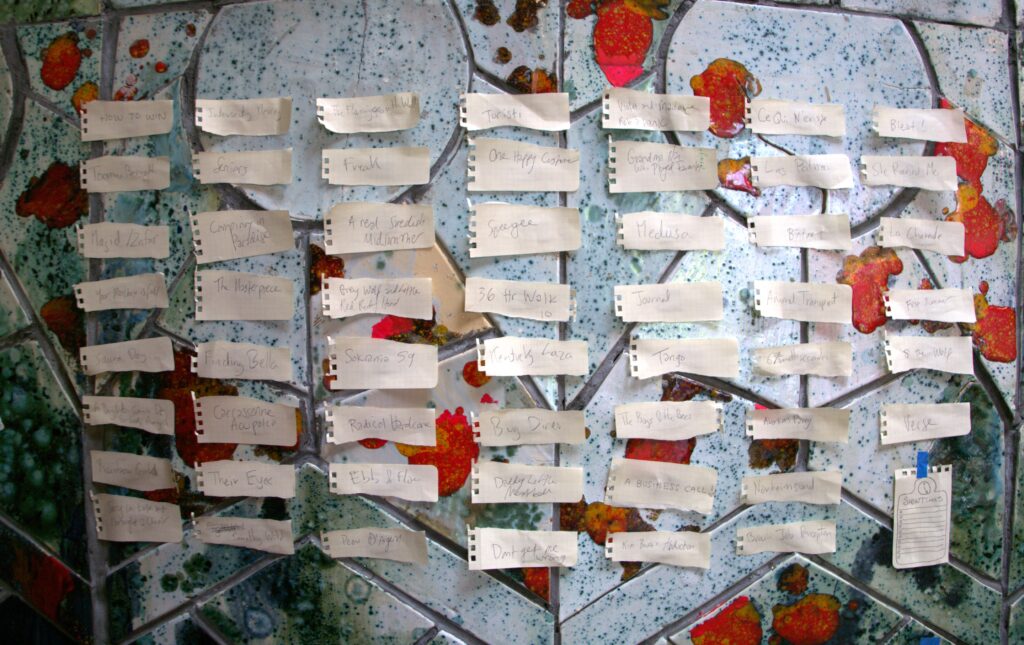
KARMA: Oh my God. Well, we have so many of them up here. I’m kind of obsessed with this movie called Sorry I’m Late, but I Brought a Choir which is a Norwegian short. I saw that at Tribeca last year where I met Ben, a programmer there, and he told me that they overlooked this film the first year the filmmakers submitted it, but then he saw it at a different festival and loved it, so the filmmakers were able to resubmit. I also love the idea, like the validation, that a festival’s programming is an imperfect thing. When we played this at one of our pop-ups, this is literally the movie the most people have texted me about being like, ‘can I have the link? I want to show my friends.’
Then I’m also really obsessed with Medusa, which is like a really fucked up movie. I like it, I don’t usually like very challenging things. I’m pretty mainstream in my taste. I’m not looking for stuff to be shocking and disturbing because I’m trying to have a good time. Like, I want to have fun. But what I love about Medusa, which is sort of about sexual assault, it really puts the audience into the position of having to decide if what’s happening is wrong or not. And I think that some audiences have come away with this, very valid, opinion of ‘it should be made clear, you shouldn’t be able to think that was okay.’ But what I think is so cool about it is like, in real life there’s not like a sign that’s like, ‘this is wrong! This is assault!’ Like you sort of have to decide that that’s what you’re gonna be calling something. And so I think it’s just a very bold movie.
I also love Sokrania 59, which is about a Palestinian family and a Ukrainian family who are refugees in Germany. And they end up housed together and they don’t speak the same language, but then they kind of band together in opposition of the land agent who’s there. The Palestinian matriarch is played by the woman who plays Logan Roy’s wife in Succession, which is awesome.
And then I only have one left. This is so hard. The gay sex comedies are sort of like, the only ones I’m ever trying to program, which, my main programmer Pierre, is always like, ‘we can’t always play these movies’.
This is really tough. Okay, so I’ve picked Sorry I’m Late, which is kind of very DIY. Medusa, which is higher budget. Then I picked Sokrania which is a drama. I think I’m going to go with… Oh, but then there’s Le Charade, which is so funny. I mean, maybe I have to do that. I’ve been trying to license this film for like a year and a half, and I cannot get this filmmaker to respond to my emails, my DMs. So if you guys can sort of publish this, I need this girl to respond to me. This is a four minute clown/mime breakup story. This French mime is getting dumped by their imaginary friend in a diner, and I would just love to watch it again. I’ve only seen it one time.
I also really love Majid/Zafar, which is a gay love story. I really love Journal, which is a gay love story. And Camping in Paradise, which is like a nudist straight love story.
LILY: So how do you guys go about programming? Can people submit somewhere?
KARMA: No, we don’t take submissions in any formal way. So part of that was because I really wanted to envision an economic model where the filmmaker was not the customer, so I didn’t want to charge for submissions. But then you can’t afford the labor to go through the submissions. So we can’t do that. So we are recruiting the films, which is like going to Clermont-Ferrand in France, the short film market. That’s really the best way so far that we’ve found- working with international distribution companies- because U.S. based distribution companies aren’t really doing much with short films at the moment, but there are so many international companies and also government arts departments from around the world. There’s over 25 different countries that we’ve met with and established relationships with to receive the short films they’re promoting, so that’s a way to funnel great films to us.
And then going to festivals, and we’re always going to short film screenings in New York, like that’s just constant. I think it’s helpful for us to see something in front of an audience, because really we’re looking for movies that do well with an audience. It’s me and my programmers Pierre and Manuela and then Cara who handles all the acquisitions. And that’s all the Shorts staff right now.
LILY: Obviously you’re going and seeing a lot of screenings in New York, but do you guys try to focus on New York filmmakers or films made in New York at all?
KARMA: No, I think at this point, over half of our programming is looking like it’ll be international. And I think that’s just because first of all, there’s so many other countries, so there’s a lot to pick from, but there are so many places where the shorts coming out of there are incredible. And the U.S. doesn’t have as much opportunity for short films, so it doesn’t bring up the best material. Or another way to think about it is just, the people who are really exceptional are rushing to get to features, and so they’re not putting all that energy into making a short.
But we’re hoping to have the first slot of the night every night be a community slot for a local filmmaker. It would only be playing one time and they can invite their friends and have a screening at Shorts. We have up to three slots every day for one-off programs. And that would be, I think, a chance to get to play so many different people’s movies, in addition to the regular programing, which has a lot more decision making going into it.
Shorts Movie Theater is set to soft open the weekend of October 16 of 2026. For more information and updates, subscribe to their newsletter and follow them on Instagram @shortsmovietheater
For more like this, subscribe to The Slam, the official Substack of the Slamdance Film Festival reporting on the future of filmmaking.