
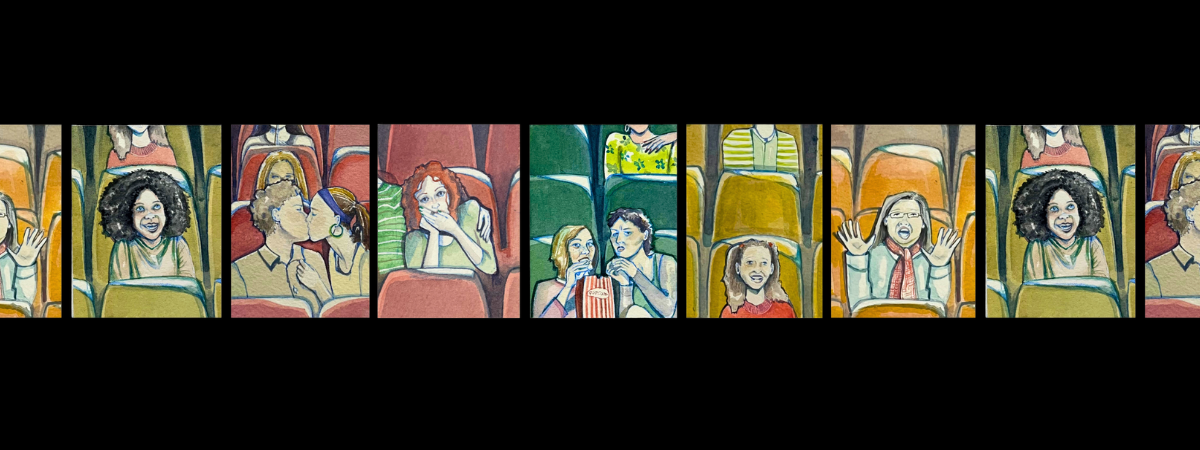
THE SLAM EDITORIAL
A NEW HOME FOR SHORTS
BY LILY CALVERT
While in New York City for our 2026 On the Road Tour, I had the opportunity to sit down with theater director-turned-entrepreneur Karma Maselli to discuss her latest venture. On a rainy summer afternoon, I made my way to Bushwick, ducking into the stained-glass doors of 236 Troutman, where the future home of Shorts Movie Theater is steadily coming to life.
Resting atop what will soon become the theater’s ticket counter is a single printed page titled “How to Succeed in Business, If You Want to Change the World”—a manifesto on Non-Profit Entrepreneurism, written by Karma’s mother, Jen Alexander, in 2000. The passage feels less like decoration than a guiding principle for the space taking shape around it:
“If you want to change the world, small can be beautiful. That’s when every positive action you take will help your mission, and you will build a web of social capital, which will be invaluable when you decide it’s time to get things done” – Jen Alexander
Shorts Movie Theater will be the first-ever cinema dedicated exclusively to short films. The micro-cinema will offer a 40-seat theater that screens a curated selection of the best new and classic short films.
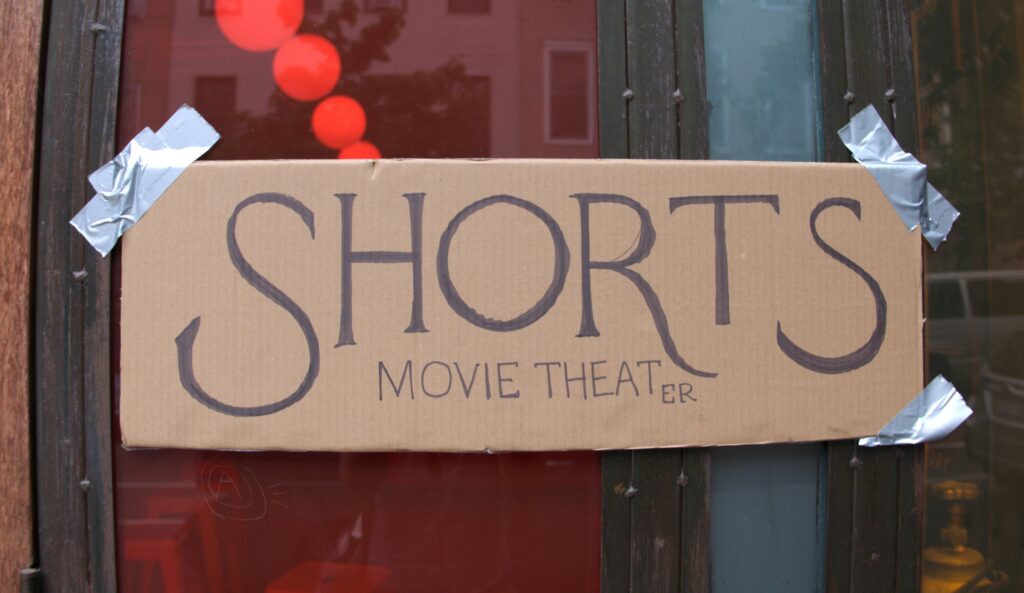
LILY: Well, do you want to start off introducing yourself?
KARMA: So I’m Karma. I am opening the Shorts Movie Theater. I would kind of describe myself as a theater director and that this is my project. Like, this is my play, and to me, the audience coming in every night is sort of like the audience coming to see a show. I found that from my perspective as both an artist and an entrepreneur, the identity of being a theater director, like, totally works with opening a [movie] theater. And from other people’s perspectives, I think this seems a little bit more like it’s about the movies- and for me, this is really about the audience, and that’s sort of what theater directing is all about.
So, I don’t know, sometimes I feel like people ask me, do you still feel like you’ll ever direct theater again? I’m like, I’m doing it right now. This is what it’s like.
LILY: What is a micro cinema in 2026?
KARMA: Oh, well, I wonder if there is a time caveat on that, like a 2026 specific definition for me, because I think theater is the same experience now as it was a hundred years ago or a thousand years ago.
I think that we have different audiences, and I think a theater’s job is to give people– I mean, for me, all art in general, your responsibility is – to give people what they need. And it’s not like art should be, you know, challenging or art should be entertaining or art should be whatever. Whatever it should be is defined by what your audience needs in the time that you’re meeting them. And so I think if there’s anything kind of specific to this moment that defines what a micro cinema is, it’s about the people that are walking in.
For us, the audience we’re focused on are people who have not found a way in their lives to participate in many cultural institutions, and they maybe don’t have a relationship to theater going. That’s not a big part of their entertainment lives – it might be a part of their ‘this is what I should do’ life. I think in our lives we have the things that we are responsible to, and then we have the things we want to do. And I think theater sometimes puts itself into the ‘you should do this’ category, but then it means you’re competing against all the other shoulds, which are like work and spending time with your family and things that [theater] doesn’t fare very well against.
So I guess when I think about what this project is, I think about who our audience is and what they are needing right now. And I think that’s just good business. And I don’t think people really need movies. I think it’s actually that you need experiences where you can connect, where you can be in the presence of other people and experience something really intense and practice leaving in peace. Because if we’re in a world where everything is very high conflict and very high stakes on a national and global level, there’s this feeling that’s just like, ‘oh, we’re not going to be able to coexist as people like this. There’s only one end to this, which is that like, we’re going to kill each other’. And I think that there’s a need from our audience to kind of practice experiencing something wild and intense and then being like, we’re all fine. We all left. Nobody killed each other.
LILY: What made you decide to start the shorts movie theater?
KARMA: Well, the biggest reason was because I just couldn’t believe that it didn’t exist already. I was directing theater and my friends were starting to work in film, so I was starting to work in film. I made a short, and I was really surprised by how normal it was amongst people trying to build careers in film, that your movie wouldn’t be seen by that many people. Speaking as somebody who made one short and submitted it to some festivals and was rejected, and was working on other people’s shorts and talking to people about their movies, I was just so surprised the audience is not a big part of the equation for so many early career film artists. Because how could it be? Where would that happen? You know, whereas with theater directing, you would never rehearse your play, build your set, and have your dress rehearsal, and then be like, ‘I hope somebody sees it one day’. Like, you would only do that if you knew that audience was going to be there.
So I was at Middlebury Film Festival in Vermont, and I met this woman, Sandrine Cassidy, who works in film distribution and festival distribution. She works at USC right now, helping their grad students find the festivals that they’ll end up [screening] with – and has become one of the biggest, most impactful champions of me and this business. And because she was the first person I ever met who worked in short films, I was like, “is there a theater for shorts?” And she was like, “no, because audiences don’t want to watch short films.” And I just thought that was such an interesting framing, which I have heard so many times since. And to me, the contradiction there is that short form content is the number one thing that audiences watch.
I think the reality of the industry as it is, is that it’s normalized, that short films don’t meet an audience, a general audience, like a public audience of people who have nothing to do with the film industry. We just kind of expect those people don’t care about short films. And I’m like, but they’re watching short videos all the time. They’re addicted to short videos and we’re making short videos, so, maybe we could sell this product to them. And then once I started working on it, it was really hard to stop.
LILY: We’ve seen social media train audiences to consume short form content super rapidly and immediately, like on demand with a scroll. How do you encourage people to slow down and engage with the shorts as art, rather than just the quick entertainment it provides online?
KARMA: I don’t think it matters at all how people engage with it. I think that the idea that when something is art, it deserves more of our attention, or that there’s a right way to engage with it isn’t necessarily true. I think you only get from your audience what you are for them, and I think it’s our responsibility as artists to build a better structure for how people can form a meaningful relationship with our work. The reason why we watch short videos like that is because the platforms are designed for [rapid consumption]. So to me, the situation is how do we come up with a platform, or a way of engaging, or a theater that creates an extremely fun and high dopamine rush-style way of engaging with something that’s secretly healthier? That is such a huge part of the secret of Shorts.
We don’t really care if people watch long stuff or short stuff, or I don’t care if they think it’s art or if they think it’s entertainment, you know? Because the thing that actually matters is that we are, as I was saying, coming together, interacting with each other and interacting with independent media, and getting a window to the rest of the world. And I think the best way to get audiences to behave the way you want is to give them what they want, and give it to them in a way that gets them to do what you want. And I think that’s a very theater directing kind of trick, because you can come out and be like, ‘this play is about blah, blah, blah’. And the audience will just turn off, you know, but you have to entertain people. You have to bring them in, and you have to do a little dance, and then when you have their attention, you can expose them to something that they maybe would have cringed away at before. So for me, the fact that people here can go in and out of the theater as much as they want, means they have that kind of decision making power that they’re getting already online.
I think just in terms of my own personal psychological interpretation of what’s going on with us, with our relationship to online, I think we’re getting something that we need from it. And so I think in designing a theater, my job is to figure out what it is that we’re getting [online] and how can you give it to people [in person]? I mean, if people are reaching for it all the time, it’s because they need it. I would personally love to not be addicted to my phone, and I would love to not be addicted to watching videos, like it sucks. It feels like such a waste of my life. But then, I think in terms of the psychology of how you actually break addiction or how you change behavior, it’s really hard to come at it from a shame perspective and succeed. So I think that the method of Shorts is, how do we think about it in a judgment free sense? What is our audience showing that they need by this behavior? And how can we give it to them in a way that’s secretly healthier?
It doesn’t really matter if they think what they’re seeing is valuable or not. I think with the videos we watch on our phones, it’s stuff that we wouldn’t actually have any interest in if they were presented to us in a different way. So it’s the method of the app that engages us with the content, so much of the content itself is kind of worthless. And so I think that just goes to show that it’s really the method that you watch. That’s what’s keeping you. And we have an opportunity to kind of steal that method and then slide in better material.
LILY: What kind of conversations are you hoping people leave the theater having?
KARMA: I mean, I would really like people to feel happy when they’re at Shorts, and I’d like them to feel like their life is one that they’re happy to be in. I think that if you could shift that in people’s lives, you could have a domino effect of good. Before starting Shorts, I don’t know if I thought so much about my audience’s happiness, but I think in the past couple of years, as our world has gotten darker and darker and suffering has increased, the kind of cognitive dissonance of being aware of so much suffering and then how that affects your goings on in your life, I think it kind of makes you feel like our world is no good, and this isn’t worth it and we’re just riding it out until we die. Like, I think that’s a bit of a tenor of how a lot of individuals feel, because it feels like the problems are so big. And I think that a shift is in order to empower people to do whatever they need to do in their lives or make the changes that they can make in order to be a part of solutions.
I personally think individual people can have a huge impact in the world, but I don’t think that it’s their fault– I don’t think individual people are at fault for the problems of the whole world. But I also think it matters that we feel like our choices and our lives really matter in how everything is going in this country and in the world. I think it’s just more fun and more interesting and life is better when you’re like, ‘it matters what I do and what I think’. And so I think that our mission is to create a space where people feel like they want to be here, they want to be engaged here and on the planet. They want to wake up in their life and not someone else’s. I think our job is to kind of glamorize and create ease around their reality rather than offer them a different reality, and that’s like a tricky line to walk. I think it has to do with our pricing. I think it has to do with our design. I think it has to do with our seating, our lighting, and the music levels. I think everything affects this sense of, are we offering you an escape? Or are we offering you a new chance to look at your life and smile and be like, ‘hey, let’s do another day of this’.
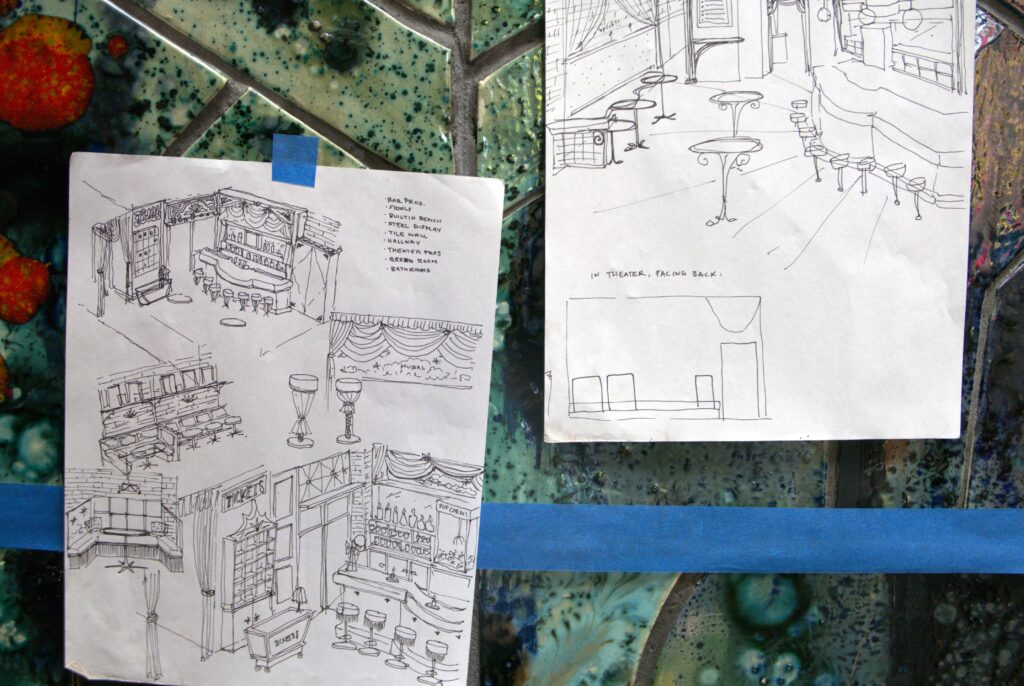
Sitting in the space, it’s immediately clear that every square foot has been shaped with intention. Cardboard mockups of curved bench seating lean against the walls, while sketches inspired by Gilded Age theaters cover nearly every available surface. Nothing feels incidental. Each rendering, material sample, and layout experiment reflects countless decisions about how audiences will move through the theater, where they’ll gather before a screening, and how they’ll experience Shorts long before the lights dim.
LILY: Could you imagine other cities adopting this model, or do you think there’s something like uniquely New York about it?
KARMA: I think every city could have a Shorts theater. So my personal opinion is that Shorts Movie Theater number two should be in Berlin. Shorts Movie Theater number three should be in Nairobi. Shorts Movie Theater number four- I’m thinking Montreal. Shorts Movie Theater five, somewhere in the Caribbean. Shorts Movie Theater number six, maybe New Zealand. Oh, and Tokyo, I think. I feel like walkability is somewhat a necessity for a movie theater like Shorts. I think we’re going to have customers who are just here for like half an hour and they’re going to their dinner reservation, or they’re on a date and they’re like, ‘let’s see a short and then let’s go to dinner’, or they’re like meeting a friend nearby, but they got to the area 45 minutes early, so they’re killing time. And then I also think you have people who are going to be here the whole night, and that’s a really different kind of customer. But they’re all cycling through the same space. And so my opinion is that every city should have a Shorts Movie Theater, and that it will.
I think that short films are such an international product that reflect filmmaking communities where feature films tend to be overlooked because you’re in a place where there’s no clear path to how to make a feature or get money for a feature. That’s where short films really flourish. So many incredible films and filmmakers making short films are working in the global South, and I think that’s a place where Hollywood doesn’t like to touch. And I feel like those could be places where Shorts Movie Theater is able to create a space that shows local material in a way that’s fun and enjoyable, and it’s designed for the material that’s actually getting made locally, which is short.
There’s nothing unique about New York in terms of short form video addiction or attention span. So I think our product, which is the experience of getting to switch between a social and an anti-social experience, like that’s really what Shorts is offering you. It’s the same mental relief that going to the bathroom and checking your phone has during a party, but instead you’re going to the theater and sitting there and being like, okay, watching a movie, and now back out and I have something to talk about. And I think our mindset is that the customer at Shorts is dealing with a level of social anxiety that’s not unique. You know, that’s just how it is for a modern young person, it can be uncomfortable to be in total proximity and connection with strangers.
LILY: Is there anything you want to leave off with?
KARMA: Usually when I talk about shorts, I talk a lot about the economics of it. And it’s interesting to talk about it in this sense because we’re talking a little more about art and movies. But for me, it’s so important that Shorts operates from its earned income, and it’s very rare for a non-profit cultural institution to do that. I don’t know if any non-profit theaters operate from their earned income, but to me, the value there is to create a space where the customer and the audience are the way we are staying open, and they’re the only people we have to serve. And I think we are in this time where the customer is not actually the main economy, it’s not who the company is mainly responsible to. There’s shareholders or there’s donors. And, I think it’s a transfer of power in terms of our experience with products, with entertainment, with everything- the person who’s spending their money on the product is not as important as the shareholder. And I think in the non-profit world, it’s a little similar to how festivals or theaters have donors that actually make the wheels turn. And obviously those organizations are set up in a way where they can still really serve their customers, but I want to make a theater where there is nobody who matters more to us being open than the people who come to see the movies. And I think giving people the experience of like, ‘oh, I’m the one who makes this all happen’ that’s what I think an audience person likes, in my theater director brain.
Part of the value, like the actual thing you’re giving someone with an entertainment experience, is the idea that they are at the center of something really magical. Ideally an entertainment experience makes the person watching it feel like all of this happens for them, and they walk back out into the world being like, ‘I matter’. And so I think you can kind of feel when you’re in a space where the customer is really important, and I think you can feel when it’s like, ‘oh, they don’t care if I live or die, it’s so not relevant that I’m here right now’.
Just the last thing I would bring up is that we have this ambitious goal that I think is possible to reach and I think would be really healthy for our industry to have, because it would potentially create generations of customers who really love being a customer to short films.
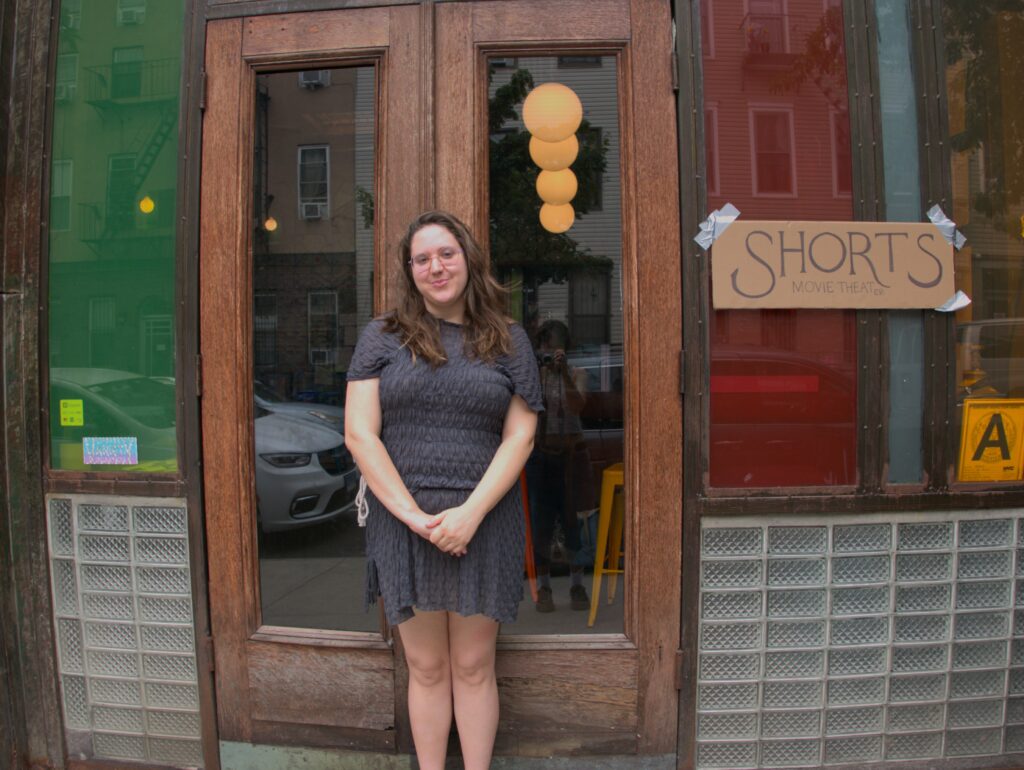
Shorts Movie Theater is set to open its doors by October of 2026. For more information and updates, subscribe to their newsletter and follow them on Instagram @shortsmovietheater
For more like this, subscribe to The Slam, the official Substack of the Slamdance Film Festival reporting on the future of filmmaking.